Welcome to Indira Gandhi International Airport, Delhi, where our representative will assist and escort you by air-conditioned car to the pre-booked hotel. During check-in, all required documents related to the tour will be handed over to you, and you will receive a detailed briefing about the tour and services, with assistance for any queries. If you arrive early enough and time permits, sightseeing can be arranged according to the available time. In the evening, witness the Light and Sound Show at Red Fort, where Delhi's long history is presented through narration, illumination and special effects against the historic Mughal fort. The presentation brings episodes from the city's 5,000-year history to life and provides an introduction to Delhi's rich historical background. Return to the hotel for overnight stay.
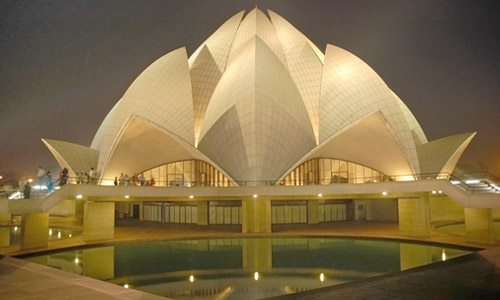
After breakfast, take a sightseeing tour of Old Delhi, visiting the Red Fort, the principal Mughal citadel of Shah Jahan's Delhi, built in red sandstone and known for its palaces, audience halls and massive defensive walls. Continue to Jama Masjid, one of India's largest historic mosques and an important example of Mughal religious architecture, followed by Rajghat, the memorial marking the cremation site of Mahatma Gandhi. In New Delhi, see President House, India Gate, built in memory of Indian soldiers who lost their lives in the Afghan War, and Birla Mandir (Laxmi Narayan Temple). Continue to Humayun's Tomb, an important Mughal garden-tomb, the lotus-shaped Lotus Temple, Qutub Minar, the towering minaret complex associated with Qutub-ud-din Aibek, and Sri Radha Parthasarathi Mandir, popularly known as ISKCON Delhi Temple. In the evening, you can opt for a cycle rickshaw ride through the colourful market of Chandni Chowk, one of Old Delhi's historic commercial areas. Return to the hotel for overnight stay.
After breakfast, check out from the hotel and drive to Agra. En route, stop at Sikandra to visit the Tomb of Mughal Emperor Akbar, a Mughal-era mausoleum set within a landscaped complex and known for its combination of red sandstone, marble and decorative architectural details. Continue to Agra and transfer to the hotel. In the evening, if time permits, visit Oswal Emporium to see its replica of the Taj Mahal, which took 10 years for the artists to build. You can also opt to enjoy the light and sound show Mohabbat-the-Taj: The Saga of Love, a theatrical presentation based on the story of Shah Jahan and Mumtaz Mahal. Agra is also known for traditional marble and soapstone inlay work, carpets, gold thread embroidery and leather shoes, offering opportunities to explore the city's long-established craft traditions. Return to the hotel for overnight stay.
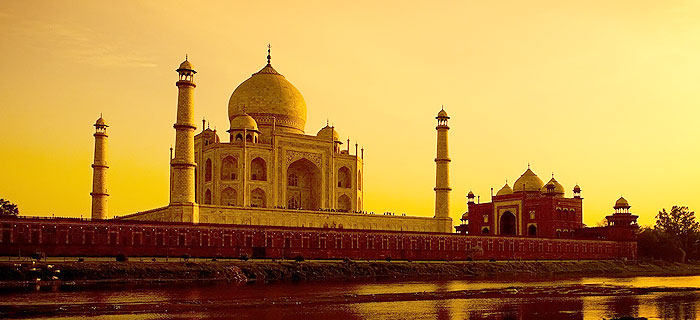
Early morning visit the Taj Mahal, a UNESCO World Heritage Site commissioned by Mughal Emperor Shah Jahan in memory of Mumtaz Mahal. Its white marble architecture, symmetrical gardens, four minarets and intricate inlay work reflect the refinement of Mughal architecture and make it one of India's most recognized monuments. Continue to Agra Fort, built in 1576 AD by Mughal Emperor Akbar and enclosed by imposing red sandstone walls. Within the fort, see the Pearl Mosque, Jahangir Mahal, Moti Masjid, Macchhi Bhawan, Nagina Masjid, Diwan-i-Khas, Sheesh Mahal, Diwan-e-Am, Meena Bazaar and Musamman Burj, where Shah Jahan was imprisoned by his son Aurangzeb and could see the Taj Mahal. Afterwards visit the Tomb of Itamad-ud-Daula, commissioned by Empress Noor Jahan in memory of her father and known for its marble decoration and delicate inlay work. Return to the hotel for overnight stay.
Today morning after breakfast, check out from the hotel and drive to Jaipur. En route stop at Fatehpur Sikri, the former Mughal capital built largely in red sandstone during Emperor Akbar's reign and associated with the Sufi saint Salim Chishti. This UNESCO World Heritage Site contains palaces, courtyards and religious structures representing the architectural traditions of the Mughal period. Visit the Diwan-e-Khas, known for its central carved pillar, the multi-storeyed Panch Mahal, the Tomb of Salim Chisti and Buland Darwaza, the monumental gateway leading into the complex. Continue towards Jaipur and stop at Abhaneri to visit its historic Step Well, built by King Chanda of the Chauhan Dynasty and associated with Hashat Mata, Goddess of Joy and Happiness. Afterwards continue to Jaipur and transfer to the hotel for overnight stay.
Today morning after breakfast, explore the Pink City with an excursion to Amber Fort, developed from the 15th century onwards under the Kachhwaha Rajputs and known for its courtyards, palaces and decorated halls. Later visit Nahargarh Fort, positioned on the Aravalli hills and offering extensive views over Jaipur. Continue to the imperial City Palace, still associated with Jaipur's royal family and containing courtyards, museums and palace buildings, followed by Jantar Mantar, a UNESCO World Heritage Site and astronomical observatory established by Maharaja Sawai Jai Singh II. See the distinctive Hawa Mahal, or Palace of Winds, known for its many small windows designed to allow royal women to observe street life while remaining screened from public view, and visit Birla Temple, constructed in white marble. You can also enjoy the Light and Sound Show at Amber Fort, presenting the history of the fort, the Kachhwaha dynasty and the development of Jaipur. Later explore the bustling market by cycle rickshaw ride. In the evening, enjoy Chokhi Dhani, an ethnic village resort offering folk dances, puppet shows, astrology, music, camel rides and traditional Rajasthani food. Return to the hotel for overnight stay.
Today morning after breakfast, check out from the hotel and drive to Delhi. En route visit Neemrana Fort, a historic fort associated with the Chauhan Rajputs and now developed as a heritage hotel. Situated on an elevated hillock, the fort dates back to 1467, when the Chauhan capital shifted from Mandhan to Neemrana under Raja Dup Raj. The fort later passed through Mughal and Jat control before returning to the Rajputs in 1775 with the establishment of the princely state of Alwar. It was restored and converted into a heritage resort in 1986, becoming one of India's early heritage hotel properties. You may opt to have lunch and enjoy the Zip Tour, an adventure activity in which participants travel along suspended cables using a harness and pulley system. After the visit, continue to Delhi and transfer to the domestic airport to board the scheduled flight for Bhubaneswar. On arrival, transfer to the hotel for overnight stay.
Today morning after breakfast, take a sightseeing tour of Bhubaneswar, the capital of Odisha and a major centre of Kalinga temple architecture. Visit the Rajarani Temples, known for their finely carved sandstone surfaces and sculptural decoration, followed by Atri, famous for its hot sulphur springs traditionally associated with healing and rejuvenation. Continue to the Shrine of Lord Hatakeswar and the State Museum, whose collections include paintings and palm-leaf etchings reflecting Odisha's artistic traditions. Visit Mukteswar Temple, noted for its ornate torana and detailed stone carving, followed by Lingaraj Temple, one of Bhubaneswar's principal Shiva temples and an important expression of the Kalinga architectural style. Continue to Parasurameswar Temple, among the city's earliest surviving temples, and explore the twin hills of Udayagiri and Khandagiri, an important group of Jain rock-cut caves preserving early religious art and architecture. The caves were brought to wider notice by A. Stirling in 1825 AD. In the evening, explore the colourful markets for Orissan handicrafts or visit Bindusagar Lake. Overnight at the hotel.
After breakfast, check out from the hotel and drive to Puri. En route visit Dhauli, the historic site associated with the Kalinga War of the 3rd century BC. The conflict is traditionally regarded as a major turning point in Emperor Ashoka's life and his later association with Buddhism and Dhamma. Continue to Konark and visit the Konark Sun Temple, a UNESCO World Heritage Site dedicated to the Sun God and built by King Narasimhadeo in the 13th century. Conceived as a colossal stone chariot, the temple incorporates 24 carved wheels and seven horses into its architectural design, symbolizing the movement of the Sun across the sky. Its extensive stone carvings depict royal, social, religious and military life of the period, while the Natamandira, or dancing hall, reflects Odisha's long association with temple dance and performance traditions. The temple is popularly known as the Black Pagoda. After the visit, continue to Puri and transfer to the hotel. The rest of the evening is free for leisure at the beach. Overnight at the hotel.
After breakfast, take a city tour of Puri, one of India's four principal Hindu pilgrimage centres and an important destination for devotees attending the annual Rath Yatra, or Car Festival. Visit the famous Jagannath Temple, dedicated to Lord Jagannath and central to the religious traditions of Puri. Continue to Gundicha Temple, traditionally associated with the Rath Yatra and the ceremonial journey of the deities, followed by Adi Shankaracharya Mutt, associated with the spiritual traditions established by Adi Shankaracharya. Enjoy a stroll through the bustling temple bazaar and explore the surroundings of the main temple complex. Puri's location on the Bay of Bengal gives the city a distinctive coastal character, with its long beach also providing an opportunity for relaxation. The evening is free for shopping or relaxing on the beach. Return to the hotel for overnight stay.
After early breakfast, take an excursion to Raghurajpur Village, a small settlement near Puri on the southern bank of the Bhargavi River, about 14 km from the city. The village is known for its traditional artists and craft heritage, with families engaged in local artistic practices. Visit the numerous small temples dedicated to Lord Laxminarayan, Radha Mohan, Raghunath, Gouranga, Gopinath and Bhuasuni, the local deity of the village. Afterwards drive to Chilika Lake, Asia's largest saltwater lagoon and one of Odisha's major natural attractions. Its extensive waters, reed islands and surrounding wetlands provide habitat for white-bellied sea eagles, ospreys, golden plovers, sandpipers, flamingos, pelicans, shovellers and gulls. During the migratory season, birds arrive from regions including Iran, Central Asia and Siberia, making Chilika particularly important for birdwatching. Afterwards return to the hotel for overnight stay.
After breakfast, check out from the hotel and drive to Biju Patnaik International Airport, Bhubaneswar, to board the scheduled flight for Kolkata. On arrival, transfer to Netaji Subhas Chandra Bose International Airport, Kolkata, to board the flight for your hometown. The tour concludes after exploring the Mughal heritage of Delhi and Agra, the Rajput heritage of Jaipur, the historic Neemrana Fort, the temple architecture of Bhubaneswar and Konark, the pilgrimage traditions of Puri, the crafts of Raghurajpur and the wetlands of Chilika Lake. On departure, the tour concludes with happy memories.
The final cost of this private customised tour depends on your preferred accommodation category, travel season, group size and specific travel requirements. The following estimates are based on a minimum of two adults travelling together and sharing one double room.